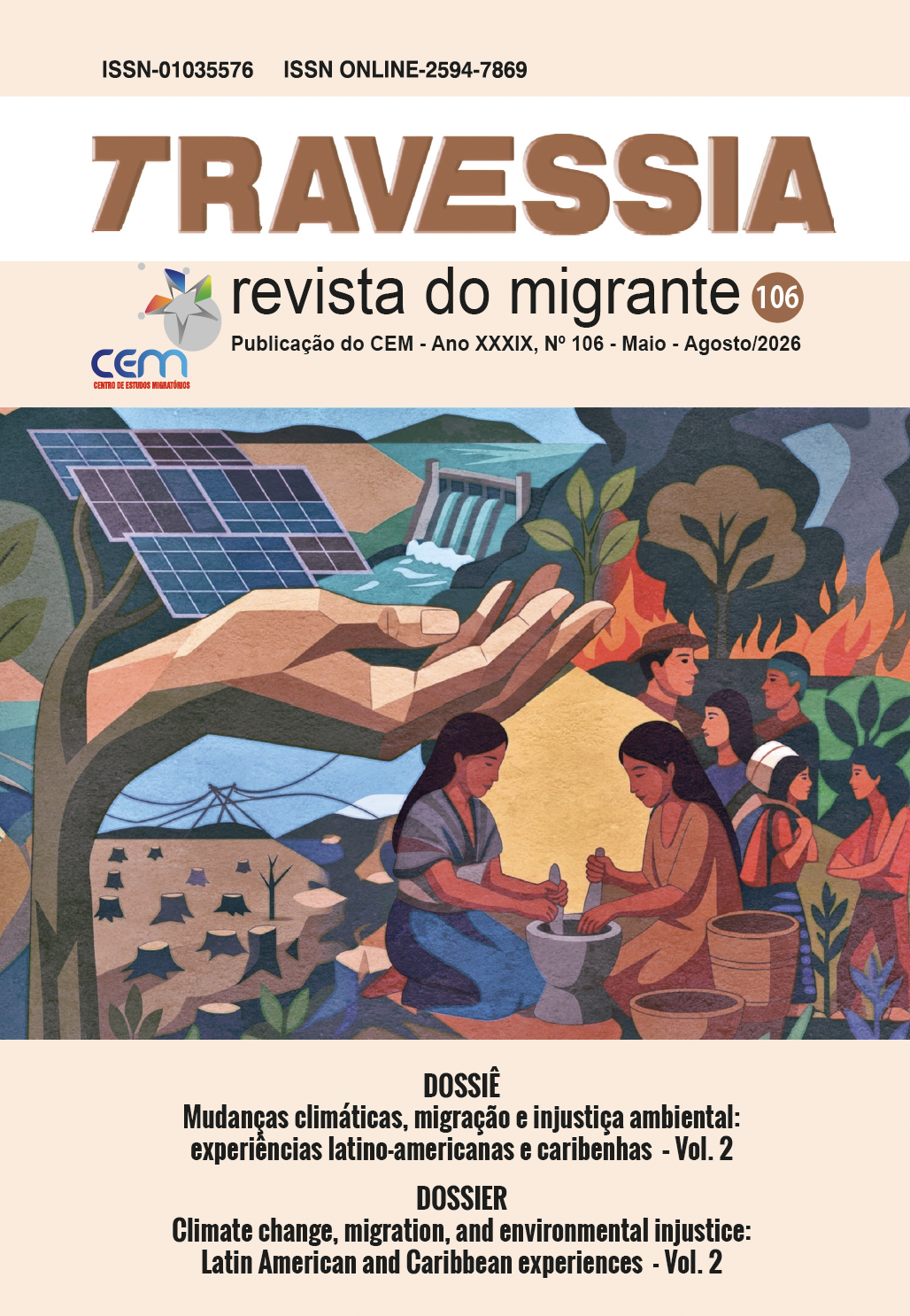
Migration and environmental justice: dynamics of expulsion and resistance in peripheral contexts
Keywords:
Climate change, Environmental migration, Environmental justiceAbstract
This article analyzes the interrelationships between climate change, migration, and environmental justice, highlighting the disproportionate impacts on vulnerable populations in Brazil, African countries, and the Latin American and Caribbean regions. It begins with the observation that many developed countries have consolidated their economic growth through the intensive exploitation of fossil fuels, a practice that often involved the exploitation of resources in African countries. Currently, as these countries strive to achieve equivalent levels of development, global policies are emerging that encourage the transition to clean energy sources, which are less accessible and less profitable for developing economies, sparking a debate on climate justice and energy equity. The methodology used is a critical literature review, which includes academic sources, international reports, government data, and comparative analyses across diverse regional contexts. Case studies on evictions caused by major territorial interventions, such as mining, infrastructure, and energy transition, are integrated into the analysis, along with resistance strategies articulated by unions, religious associations, migrant collectives, and civil society organizations in cooperation with international organizations. The results reveal a structural inequality in the distribution of climate and environmental impacts, exacerbated by predatory development models that drive forced displacement. They also highlight the importance of social mobilization and participatory inclusion in public policies to promote environmental justice and effective reparations. The conclusion is that overcoming these challenges requires the incorporation of social and environmental justice as fundamental principles in public policies, recognizing the rights and dignity of affected populations.